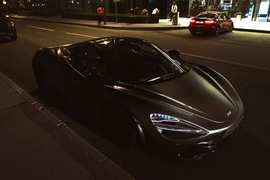
The Pagani Utopia represents the third distinct model line from the revered marque in over 25 years, continuing the legacy of excellence established by the Zonda and Huayra. This new hypercar, priced from £2,200,000, not only inherits the defining characteristics of its predecessors but also imbues them with a unique identity, driven by an formidable 852bhp twin-turbo V12 engine.
EVO RATING:
RRP: From £2,200,000
Positives: Relentless performance; exquisite detailing; three-pedal manual transmission.
Negatives: Inaccessible for most.
The sheer force of the Utopia’s torque is its most immediate and arresting characteristic. Engaging a lower gear at a moderate speed, even as low as 30mph, and progressively applying throttle unleashes an explosive surge of power. This is not the abrupt jolt of an electric hypercar, but a rapidly intensifying longitudinal acceleration that commands the driver’s full attention. The initial sensation can be disorienting, eliciting an instinctive physical reaction akin to losing balance. However, as the driver acclimatizes, this raw power is replaced by an exhilarating adrenaline rush and an almost uncontrollable urge to repeat the experience. The novelty of such potent acceleration never diminishes, highlighting the fundamental appeal of this extraordinary machine.
A New Standard in Hypercar Design:
Named after Sir Thomas More’s seminal work on societal perfection, Horacio Pagani’s Utopia is a tangible realization of automotive artistry. This £2,200,000 hypercar, weighing a mere 1280kg and capable of 217mph, is a testament to advanced composite materials and exotic alloys, powered by an 852bhp twin-turbo V12. While More’s vision remained an ideal, Pagani’s creation is a meticulously crafted reality, albeit for the exclusive 99 customers who have secured a coupe build slot, with some opting for the Roadster variant. For automotive journalists, the Utopia offers a fleeting, privileged experience on the finest roads surrounding the factory, a day to immerse in the world of the ultra-discerning automotive connoisseur.
Evolution of an Icon:
The introduction of a new Pagani model is a rare event, reflecting the meticulous craftsmanship and artistic dedication that defines the brand. The Utopia marks only the third new model line to emerge from Pagani’s San Cesario sul Panaro facility in 26 years. The journey from evo’s initial visit in 1999, when the company occupied a modest glass and steel structure now serving as its Art & Science Research Centre, to the present day’s expansive ‘Atelier’ headquarters and museum (opened in 2017) signifies a profound evolution. This state-of-the-art facility now houses production, restoration, personalization, and special projects departments, underscoring Pagani’s growth and commitment to innovation.
An Immersive Introduction:
The initial encounter with the Utopia is from the passenger seat, alongside Pagani R&D test driver Alberto Scilla. While typically a passenger’s experience in a high-performance vehicle can be nerve-wracking, this handover is a process built on trust and mutual respect. It also provides a valuable opportunity to observe the car’s dynamics and performance characteristics before taking the helm.
The Futa Pass: A Perfect Stage:
The Futa Pass, a renowned segment of the historic Mille Miglia route and a mere 90 minutes from Pagani’s HQ, serves as the ideal backdrop for experiencing the Utopia. This picturesque location allows for an immersive driving experience without attracting undue attention, as Scilla navigates out of Modena and onto the autostrada with the camera car in close pursuit. Even from the passenger seat, the Utopia delivers a spectacular experience, demonstrating a surprising suppleness for its class. While the V12 engine is ever-present, its power is judiciously managed at lower speeds and throttle inputs, yet capable of delivering immense force when demanded. Pagani has always prioritized road usability, and the Utopia achieves a new benchmark in refinement without compromising its exhilarating performance.
The Art of the Manual Transmission:
Scilla elaborates on the significant engineering effort dedicated to perfecting the manual transmission and clutch feel. Managing 811lb ft of torque necessitates a transmission that offers exceptional delicacy, a challenge met with remarkable success. The ease with which Scilla shifts through the gears, coupled with the precise clutch engagement, suggests a manual gearbox that truly elevates the traditional stick-shift experience.
A Predator on the Autostrada:
The Utopia moves with the effortless grace of an apex predator on the A1 autostrada, effortlessly parting traffic with its commanding presence. The V12 engine’s response, a rich symphony of hisses and roars as boost pressure builds, is more immediate and characterful than the Huayra’s, possessing a sharper, more steel-like edge. This is a truly remarkable powerplant.
The Siren Call of Design:
Upon stopping for fuel, the Utopia inevitably draws a crowd, a phenomenon akin to a scene from a zombie movie, albeit with a friendlier disposition. The allure of its wide, low, and aesthetically captivating form is undeniable. Even after an hour spent in its presence, the car retains its mesmerizing quality. Eschewing overt aerodynamic appendages and aggressive diffusers, the Utopia prioritizes a more artistic approach, celebrating purity of form while incorporating lavish embellishments and striking details – a signature Pagani aesthetic.
Craftsmanship Beyond Compare:
The tactile experience of holding the weighty, Utopia-shaped key is satisfying. The car’s compound curves invite scrutiny, revealing a level of craftsmanship where every exterior and interior brightwork component is machined from solid billet. This meticulous attention to detail imbues the Utopia with a jewelry-like quality, creating the impression that the entire vehicle has been sculpted from a single, monolithic piece.
An Artisanal Cockpit:
The dihedral doors, a departure from the Huayra’s gullwings and the Zonda’s conventional hinges, open to reveal an extraordinary cockpit. Packed with exquisite materials and a riot of shapes and finishes, it is a dazzling exercise in maximalism. Familiar Pagani design cues, such as the periscope air vents, crescent-shaped instrument binnacle, exposed carbon fiber structure, and innovative glazing extending into the roof, are all present and accounted for, enhancing both light and a sense of spaciousness.
A Celebration of Mechanical Purity:
In keeping with its ethos, the Utopia champions mechanical excellence. The analogue instruments feature small portholes, offering glimpses into their intricate workings, reminiscent of a fine Swiss watch. The gear shifter for the optional seven-speed manual gearbox, a sculptural element rising from the transmission tunnel, is machined from solid material, its complex linkage proudly displayed.
The Da Vinci Philosophy:
Pagani’s profound admiration for Leonardo da Vinci, a proponent of the inseparable link between art and science, is evident throughout the Utopia. The steering wheel exemplifies this philosophy. Crafted from a 43kg billet of high-grade alloy, it undergoes 28 hours of five-axis machining to tolerances of just 0.5 microns, followed by meticulous hand-polishing, resulting in a finished wheel weighing a mere 1.6kg. The substantial 41.3kg of recycled swarf highlights the incredible precision and dedication involved.
The Manual Masterpiece:
In contrast to the heavy clutch pedals of yesteryear’s manual supercars, the Utopia’s clutch is light and smooth. It requires just enough resistance to feel mechanical, while offering a delightful ability to find the bite point for seamless departures. The gearshift itself is clean and precise, with a satisfying, albeit slightly longer, throw than some gated Ferrari shifts, yet undeniably pleasing.
A Nod to Nostalgia:
The inclusion of a dog-leg first gear adds a touch of nostalgic charm. The abundance of torque from idle means that pulling away in second gear is easily achievable, but the positive spring bias on the shifter facilitates slick and precise upshifts into second and beyond. This is likely why 70 percent of Utopia customers opt for the manual transmission.
Bridging Analog and Digital:
Despite its proudly analogue aesthetic, the Utopia benefits from advanced and seamlessly integrated electronics. Drivers can select from Comfort, Sport, Race, and Wet dynamic modes to tailor the car’s demeanor. A ‘Supersoft’ mode provides immediate access to the most compliant suspension setting, akin to Ferrari’s bumpy road button.
Refined Dynamics:
The semi-active TracTive dampers are exceptionally well-calibrated, offering an impressive equilibrium between bump absorption and body control, minimizing the need for frequent use of the Supersoft mode. The Sport setting provides a noticeable boost in responsiveness without rendering the car overly agitated. The Electronic Stability Control (ESC) offers reassuring oversight, subtly intervening to manage aggressive throttle application on corner exits, ensuring blistering progress, particularly when the Pirelli P Zero Corsa tires are at optimal temperature.
Navigating the Limits:
The decision to engage Race mode is approached with careful consideration, given the considerable value of the vehicle. However, the compromise of selecting Race mode while retaining ESC intervention proves to be the judicious choice. Race mode unlocks the Utopia’s full performance potential, while the more relaxed ESC allows for enjoyable levels of rear-wheel overste rotation, balanced by dependable electronic intervention.
A Symphony of Power and Precision:
Accelerating the Utopia through its gears is akin to launching a rocket. The AMG-designed and hand-built Pagani V12, with a redline of 6700rpm, is not a high-revving screamer, but each gear change is an event to be savored. Third and fourth gears are most frequently utilized, with occasional excursions into fifth and second. In Race mode, the V12’s exhaust note becomes harder and more guttural, accompanied by an array of induction and turbocharger sounds during throttle modulation. The off-throttle experience is equally captivating, with a bass-heavy discharge from the exhaust on overrun.
Harmonizing Power and Agility:
This raw, explosive power is beautifully contrasted by the Utopia’s seductive design and refined character. Its precision, poise, and perceived compactness are hallmarks of contemporary hypercar design, a stark contrast to the unwieldy nature of earlier large supercars. The Utopia, while timeless in its objectives, has evolved with the times, benefiting from a lightweight chassis and mechanical purity that negates the need for complex mass-mitigation systems.
Power-to-Weight: A Deeper Understanding:
While power-to-weight ratios can be numerically comparable, the driving experience differs significantly. The 1280kg dry (1340kg wet) Utopia, with its 852bhp and 811lb ft, may be numerically surpassed by hypercars like the Pininfarina Battista or Bugatti Chiron. However, its significantly lower weight translates to a more energized and alert feel, requiring less effort to propel, contain, and maneuver.
Exploiting the Performance Envelope:
On the optimal sections of the Futa Pass, this translates to colossal potency between corners, coupled with exceptional capability in braking zones and through turns. The car feels natural, predictable, and exploitable, encouraging drivers to delve deeper into its vast performance reserves. The steering is light and precise, offering rapid responses yet maintaining sufficient calmness for accurate apex targeting. The ability to precisely place the inside front wheel is uncanny. While initial engagement might call for a fraction more feedback, prolonged driving reveals that this lack of distraction is a deliberate design choice. Combined with the light clutch, seamless gearbox, and monumental powerplant, the Utopia fosters a sense of harmony rather than conflict.
Braking Power:
The massive 410mm front and 390mm rear Brembo CCM-R brakes, employing enormous six-piston front and four-piston rear calipers, deliver progressive clamping force to vast carbon rotors. They are easily modulated at lower speeds and offer relentless bite at higher velocities, with a consistently firm pedal providing unwavering confidence.
Transcending Convention:
The magic of the Utopia lies in its ability to transcend conventional hypercar doctrines. It is immensely powerful and exceptionally fast, yet its name embodies a pursuit of perfect harmony rather than an obsession with extremes at the expense of the overall experience. The marriage of the monumental biturbo V12 with a sweet-shifting manual gearbox is transformative. Similarly, eschewing astronomical horsepower figures and extremely high redlines results in a powertrain delivering exhilarating yet nuanced performance, perfectly suited for road use at all speeds. Its compliance with global emissions and homologation standards further underscores Pagani’s meticulous approach, reinforced by the invaluable partnership with AMG.
Sophisticated Integration:
While advanced electronics are sometimes perceived as antithetical to organic, analogue-feeling cars, the Utopia demonstrates their adept application. The sophisticated integration of adaptive damping, ESC, and electronic differential enhances the car’s feel and dynamism, providing control and refinement when needed, and unleashing its full potential for spirited driving.
A Masterclass in Evolution:
The result is a savagely quick and sublimely sorted hypercar. It seamlessly blends the purity and engagement of the Zonda with the epic reach and modern refinements of the Huayra, all while asserting its own authentic character and distinct capabilities. The Utopia advances the hypercar landscape while adhering to its own timeless principles, remaining contemporary where it counts and enduring where it matters. Pagani has once again achieved automotive perfection.
The Pagani Utopia Roadster: A Simultaneous Design Vision:
Unlike previous Pagani models, the coupe and Roadster versions of the Utopia were conceived and developed concurrently. This integrated design process has resulted in a Roadster with even fewer compromises. The dry weight remains identical to the coupe at 1280kg, with Pagani’s mastery of carbon fiber ensuring exceptional tub rigidity without the need for additional reinforcement. Like its coupe sibling, the Utopia Roadster meets global safety and emissions homologation standards. However, build numbers and pricing have increased, with the Roadster retailing at £3.1 million for each of the 130 units planned, with annual production between 50 and 60 cars.