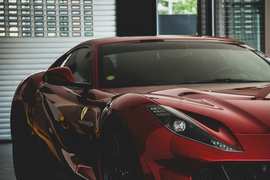
The Evolution of Precision: Analyzing the Porsche 911 GT3 RS Legacy and the 992.2 Horizon
Since 1999, the Porsche 911 GT3 RS has stood as the gold standard for track-focused engineering. As someone who has spent the last decade deep in the trenches of automotive journalism and performance tuning, I have watched this nameplate evolve from a specialized homologation special into a technological powerhouse that defies physics. The upcoming 992.2 iteration represents more than just a mid-cycle refresh; it is a critical juncture for Porsche’s most celebrated naturally aspirated sports car.
From 996 Origins to 992.1 Mastery
The lineage of the Porsche 911 GT3 RS is defined by an relentless pursuit of weight reduction and aerodynamic efficiency. When the original 996 variant debuted, it was already a revelation—a car that stripped away the creature comforts of a standard 911 to create a visceral, race-hardened experience. Over the last two decades, Porsche has refined this recipe, moving from basic weight-shaving measures to the current 992.1 paradigm, which integrates active aerodynamics, carbon fiber structural components, and race-derived suspension kinematics.
The current 992.1 GT3 RS is, quite simply, an engineering marvel. With 860kg of downforce at 177mph and a blistering 6:44.85 Nürburgring lap time, it has effectively blurred the lines between production sports car and dedicated GT3 racing machinery. The core of this performance remains the 4.0L naturally aspirated flat-6 engine, which delivers 525 horsepower with a linear response that turbochargers—no matter how advanced—simply cannot replicate.
The 992.2 Prototype: What the Spy Shots Tell Us
As the Porsche 911 GT3 RS 992.2 nears its debut, the automotive world is hyper-focused on the subtle revisions spotted during high-speed testing at the Nürburgring. From a design perspective, Porsche is opting for an “evolution, not revolution” strategy. The silhouette remains unmistakably aggressive, featuring the iconic swan-neck rear wing with integrated Drag Reduction System (DRS) technology, which draws a direct line from Formula 1 to the consumer market.
The test mules reveal a familiar front fascia, though with tweaked rear diffuser geometry and subtle intake modifications flanking the exhaust. Interestingly, while the standard 992.2 models have transitioned to integrated headlight blinkers, the GT3 RS prototype retains the lower light placements, signaling that functional cooling and aerodynamic ducting remain the absolute priority over clean-sheet styling.
The Hybrid Debate: Why Naturally Aspirated Still Rules
A common topic of discussion among luxury sports car enthusiasts and industry experts is whether the 992.2 GT3 RS will adopt the 3.6L twin-turbo hybrid powertrain found in other 992.2 variants. While high-performance hybrid systems offer incredible torque-fill and acceleration figures, there are significant drawbacks for a vehicle designed with the GT3 RS philosophy in mind.
Weight is the enemy of track performance. Integrating a battery pack and electric motor adds mass that compromises the car’s agility, steering feel, and braking zones. My assessment is that Porsche will likely retain the 4.0L naturally aspirated flat-6 for this specific iteration. The GT3 RS is not meant to be a drag-strip king; it is a precision instrument designed for driver engagement. To lose that high-revving, metallic, naturally aspirated soundtrack would be a betrayal of the nameplate’s soul. If Porsche intends to chase hybrid super-performance, they have the upcoming GT2 RS to handle that heavy lifting.
Market Dynamics and the Competitive Landscape
The premium sports car market is more crowded than ever, with competitors like the Mercedes-AMG GT Black Series and upcoming track-specialized exotics vying for the same demographic. However, the Porsche 911 GT3 RS occupies a unique space. It benefits from an immense “resale value” and “brand prestige” that keeps its market demand high even years after production.
For investors and enthusiasts looking into luxury automotive assets, the GT3 RS consistently ranks among the top high-performance vehicles for long-term appreciation. As we move closer to a future dominated by electrification, this car is likely to be viewed as a “swansong”—the final, purest expression of the internal combustion era from Stuttgart.
Technical Performance Expectations
When looking at the 992.2, we anticipate further optimizations in the suspension dampers and steering geometry. Improving the feedback loop between the road and the driver is the final frontier for a car that already produces massive downforce. By fine-tuning the active aero profiles, Porsche will likely shave another fraction of a second off their own lap records, reinforcing the 911 GT3 RS as the benchmark for luxury sports car performance.
Final Thoughts on the Future of the RS
The Porsche 911 GT3 RS is more than a vehicle; it is a manifestation of ten years of my professional life observing how manufacturers push the limits of mechanical grip. Whether you are a track-day veteran or a collector, the 992.2 generation promises to be the most refined version of an icon. The commitment to the naturally aspirated flat-6 is a testament to the brand’s dedication to purity over raw, battery-assisted numbers.
As testing concludes and the official unveiling approaches, the anticipation is palpable. If you are serious about securing one of the most significant driver’s cars of the 21st century, now is the time to speak with your local authorized Porsche dealer to discuss acquisition strategy and allocation. Contact your Porsche Center today to ensure you are on the list for the next evolution of this automotive legend.