Ferrari 296 GTB Review: The Benchmark the Lamborghini Temerario Must Surpass
In the high-stakes world of mid-engine exotics, the arrival of the Ferrari 296 GTB marked a seismic shift in Maranello’s philosophy. For over a decade, I’ve tracked the evolution of the performance segment, and rarely have I seen a manufacturer pivot so decisively from the established V8 formula to a plug-in hybrid architecture. While the industry fixates on the impending arrival of the 903bhp Lamborghini Temerario, the Ferrari 296 GTB remains the definitive standard that its Sant’Agata rival must topple to claim the throne.
The Ferrari 296 GTB is more than just a spec-sheet powerhouse; it is a masterclass in hybrid integration. By pairing a 120-degree, twin-turbocharged V6 with an electric motor, Ferrari has achieved an 819bhp output that defies traditional expectations for a road-going supercar. As we move further into 2025, the 296 GTB stands as a testament to how electrification can enhance, rather than mask, the visceral nature of driving.
Engineering the Future: Beyond the V8
The move from the legendary twin-turbo V8 to the 296 GTB’s V6 was initially met with skepticism by purists. However, the engineering reality is undeniable. The compact V6 engine, nestled low in the chassis, allows for a 50mm shorter wheelbase compared to its predecessors. This architectural shift creates a nimble, reactive platform that feels far more intuitive than the heavier, all-wheel-drive SF90.
The hybrid system is not merely for fuel efficiency; it is an performance multiplier. The electric motor contributes a significant 165bhp, smoothing out the torque curve and providing an instant “torque fill” that eliminates any hint of turbo lag. When you plant your foot, the acceleration is instantaneous—a relentless, surge-heavy experience that rivals the most potent internal combustion machines on the market.
Mastering the Dynamics
What truly sets the Ferrari 296 GTB apart from the competition—including the McLaren 750S—is its sophisticated chassis management. The proprietary 6w-CDS (six-axis chassis dynamic sensor) is a game-changer. It monitors acceleration and rotation in real-time, feeding this data into the Side Slip Control and active E-Diff to maintain grip at the contact patch.
During my time behind the wheel, the precision was staggering. Whether you are attacking a tight apex or carrying speed through a sweeping bend, the steering is telepathic. It doesn’t just turn; it connects the driver to the road with a degree of intimacy that is becoming increasingly rare. Furthermore, the introduction of the ABS-evo system—leveraging brake-by-wire technology—allows for aggressive trail braking that is both stable and incredibly confidence-inspiring.
The Assetto Fiorano Advantage
For those who prioritize track performance, the Assetto Fiorano pack is a must-have upgrade. By replacing standard dampers with Multimatic items and integrating carbon-fiber aerodynamic appendages, this setup adds 20kg of downforce to the front end. Combined with the optional Michelin Pilot Sport Cup 2 R tires, the transformation is palpable. The car feels glued to the tarmac, turning in with a sharpness that challenges your perception of physics.
While the standard Ferrari 296 GTB is a magnificent tourer, the Assetto Fiorano configuration turns it into an apex-hunting weapon. If you are shopping for a luxury investment vehicle that prioritizes track-day capability, this package is the high-CPC value option that maintains the car’s desirability for years to come.
The User Experience: High Tech, High Complexity
If there is a flaw in this masterpiece, it lies in the digital interface. The cabin, heavily influenced by the SF90, relies on a haptic-heavy steering wheel and touch-sensitive pods that can be frustratingly opaque. In a vehicle where the focus should be on the connection between driver and machine, having to navigate sub-menus to adjust simple settings feels like a step backward in ergonomics.
Yet, once you are moving, these gripes fade. The sound of the V6—often unfairly compared to the V10s of old—is genuinely musical, offering a unique, rasping character that evolves with every throttle input. It is a modern sound for a modern era, proving that a supercar doesn’t need ten or twelve cylinders to deliver an emotional experience.
The Competitive Landscape: Facing the Temerario
The Lamborghini Temerario is undoubtedly a formidable opponent on paper, boasting a 10,000rpm redline and a hybrid powertrain that threatens to outshine Ferrari in raw numbers. However, the true test for any supercar is how it hides its weight and complexity. The Ferrari 296 GTB has managed to disguise its hybrid battery and electronic systems so effectively that it feels like a lightweight, naturally aspirated machine.
If Lamborghini focuses solely on the “horsepower war,” they may miss the mark. The Ferrari 296 GTB succeeded because it didn’t just add power; it refined the feeling of driving. It is the best hybrid supercar of its generation because it feels organic, rewarding, and uniquely balanced.
Final Thoughts: Why the Ferrari 296 GTB Wins
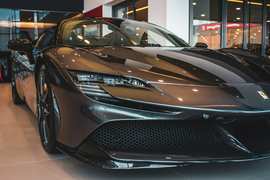
As we look toward the remainder of 2025, the Ferrari 296 GTB remains an untouchable benchmark. It is a stunning piece of automotive design that draws inspiration from the 250LM while looking firmly into the future. Whether you are looking for a weekend companion for winding roads or a track-ready instrument that pushes the limits of agility, this Ferrari delivers an unparalleled driving experience.
The evolution of the supercar is accelerating, and the 296 GTB has laid the groundwork for everything that follows. It is a sophisticated, intoxicating, and brilliantly realized vision of what a hybrid exotic should be.
Are you ready to experience the pinnacle of Ferrari engineering for yourself? Contact your local authorized dealership today to schedule a private viewing or test drive, and discover why the 296 GTB is the car that redefined the modern supercar segment.