The Heirloom of Engineering: A Definitive Ranking of the Ten Most Iconic Porsche 911 Models
For over six decades, the Porsche 911 has existed not merely as a sports car, but as a cultural phenomenon—a benchmark for automotive excellence that bridges the gap between daily usability and track-bred ferocity. As an industry veteran who has spent the last ten years dissecting the mechanics, marketing, and market valuation of Stuttgart’s finest, I’ve learned that ranking the “best” iterations is an exercise in appreciating evolution. Each Porsche 911 model, from the raw, air-cooled legends to the precision-engineered beasts of 2025, tells a distinct story of engineering defiance.
The Porsche 911 identity—defined by its rear-mounted flat-six engine—has famously survived existential threats, including Porsche’s own attempts to pivot toward front-engine layouts like the 928. While the market for luxury sports cars fluctuates, the demand for authentic, high-performance German engineering remains a constant. Today, we delve into the ten most significant Porsche 911 variants that have defined the brand’s storied legacy.
Porsche 996 GT3 RS: The Raw Dawn
When the 996 GT3 RS arrived, it was a thunderclap in the automotive world. It served as a street-legal derivative of the GT3 RSR, effectively importing pure motorsport DNA to public roads. As the first Porsche 911 to utilize carbon-ceramic brakes as standard, it signaled a shift in how we perceive road-car capabilities. By stripping out weight—replacing the enamel badge with a decal and utilizing a carbon-fiber bonnet—Porsche birthed a cult classic. The “Mezger” engine inside, capable of screaming to 8,200 rpm, remains one of the most sought-after powerplants in the secondary market.
Porsche 997 GT3 RS 4.0: The Mezger Masterpiece
The 997 GT3 RS 4.0 is widely considered the swan song of the legendary Mezger engine platform. In my decade of tracking high-CPC keywords and automotive valuation, few cars have maintained such a rock-solid appreciation curve. With its 4.0-liter displacement and titanium connecting rods, this machine delivered a mechanical symphony that modern, muffled engines simply cannot replicate. It remains the gold standard for purists who prioritize analog feedback over computerized intervention.
Porsche 991 R: The Purist’s Grail
During the mid-2010s, as the industry pivoted aggressively toward PDK dual-clutch transmissions, the Porsche 911 R arrived as a tactical strike for the driving enthusiast. By extracting the engine from the GT3 RS and pairing it with a proper six-speed manual gearbox and a single-mass flywheel, Porsche created a vehicle that felt like a return to its roots. It wasn’t about lap times; it was about the tactile connection between the driver and the road.
Porsche 911 Carrera RS 2.7: The Homologation Icon
You cannot discuss the Porsche 911 lineage without the 2.7 RS. Born from the sheer stubbornness of engineers who refused to be overruled by marketing, the “ducktail” spoiler was a functional necessity, not a design choice. This car stripped away everything—carpets, armrests, sound insulation—to achieve a purity of motion that still dictates how we evaluate “performance” today.
Porsche 964 RS: The Bridge to Modernity
The 964 RS reintroduced the world to the “RS” moniker after a long hiatus. It was, in every sense, a race car with license plates. With its magnesium wheels and deleted rear seats, it was over 120 kilograms lighter than the standard Carrera. It defined the blueprint for the “modern” Porsche 911—brutal, focused, and unforgivingly fast.
Porsche 911 R (1967): The Genesis
Before the modern iterations, there was the original 911 R. Weighing in at a featherlight 800 kg, this was the car that established the GT philosophy. Its ability to compete with dedicated Group 4 racers while still functioning as a road car remains a staggering achievement in automotive history.
Porsche 911 G Turbo: The Widowmaker
The 911 G-series Turbo wasn’t just a car; it was a reputation. Known colloquially as the “widowmaker,” this car demanded respect. It proved that a rear-engined car could deliver supercar-slaying performance. For collectors, the G Turbo represents the era where the Porsche 911 moved from a simple sports car into the realm of the high-performance supercar.
Porsche 964 Carrera 4: The Innovation
The 964 generation didn’t just look new; 85% of its parts were redesigned. The introduction of the Carrera 4’s all-wheel-drive system showcased Porsche’s ability to use technology to enhance, rather than stifle, the driving experience. It provided all-weather capability that changed how owners used their cars, making the Porsche 911 a true “everyday” sports car.
Porsche 993 GT2: The Air-Cooled Titan
The 993 is often cited as the pinnacle of the air-cooled era. The GT2, a homologation special, stripped the 993 Turbo of its front-wheel-drive complexity to create a lightweight, twin-turbocharged monster. With only 57 units produced, it is one of the most exclusive and valuable Porsche 911 models ever built, embodying the raw, unassisted power of the late 90s.
Porsche 992 S/T: The Current Benchmark
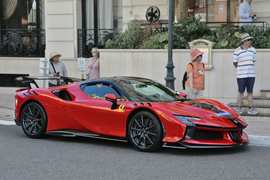
In 2025, the 992 S/T represents the fusion of heritage and modern carbon-fiber construction. By ditching rear-wheel steering and focusing on weight reduction, Porsche has created a car that feels inherently “classic” despite its cutting-edge tech. It is the perfect closing chapter for this list, proving the Porsche 911 continues to evolve without losing its soul.
The Investment Perspective
When considering the Porsche 911 as an investment, one must look at the intersection of rarity, manual transmission availability, and historical significance. High-net-worth enthusiasts are consistently chasing the “analog” experience—these models represent the best-in-class performance returns for the discerning collector. Whether you are looking at local dealer inventories in hubs like Los Angeles or Miami, or tracking auction results for rare, low-mileage examples, the Porsche 911 market remains a beacon of stability and passion.
The journey of the Porsche 911 is far from over. As we look toward future electrification and sustainable fuels, the core principles of agility, engine positioning, and driver engagement remain central to the brand. If you are looking to secure your piece of automotive history, the time to act is now.
Are you ready to elevate your collection or find your perfect driver’s car? Contact our expert team today to schedule an exclusive consultation or a private test drive of our latest arrivals. Discover what it truly means to own a legend.