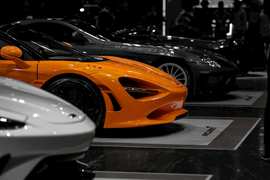
The Apex Predators: Navigating the Stratosphere of Automotive Velocity in 2025
The relentless pursuit of speed, a fundamental human drive as old as the wheel itself, continues to define the automotive landscape. From the humble 10 mph of the 1885 Benz Patent-Motorwagen to the mind-bending velocities achievable today, the evolution of the automobile is a testament to human ingenuity and our insatiable desire to push boundaries. While specialized dragsters and jet-powered marvels can breach the 700 mph barrier, they remain tethered to the realm of closed courses and specialized events. For those who crave the thrill of stratospheric speed blended with the practicality of road legality, the landscape of fastest cars in the world 2025 has never been more electrifying.
As an industry observer with a decade immersed in the automotive sector, I’ve witnessed firsthand the accelerating pace of technological advancement. The year 2025 marks a significant inflection point, where electric propulsion is not just challenging but often surpassing the outright velocity benchmarks once solely held by internal combustion engines. The quest for the fastest cars in the world 2025 is a dynamic narrative, constantly being rewritten by innovators who fuse cutting-edge engineering with audacious design. This isn’t merely about reaching a higher number on the speedometer; it’s about the intricate interplay of aerodynamics, powertrain efficiency, chassis dynamics, and the very materials used in their construction. The pursuit of these record-breaking supercars involves substantial investment in automotive performance engineering and has a significant impact on the luxury car market.
This exploration delves into the elite echelon of production vehicles that redefine what’s possible on public roads. We will examine the technical prowess, the exhilarating performance metrics, and the sheer engineering artistry that propels these machines to the forefront. We’ll dissect the titans of speed, seeking out the top speed hypercars available for purchase.
The Reigning Monarchs: Top Tier Velocity Achievers
At the pinnacle of automotive velocity, the contenders for the fastest production cars are engaged in an intense battle. These are not merely machines; they are meticulously crafted instruments of physics.
Koenigsegg Jesko Absolut: The Theoretical Sovereign
Christian von Koenigsegg has once again pushed the envelope with the Jesko Absolut. While its official top speed remains a theoretical frontier, the engineering behind it is undeniable. This hypercar boasts a twin-turbocharged 5.0-liter V8 engine producing a staggering 1,600 horsepower. With a weight of just 1,390 kg, its power-to-weight ratio is peerless. The Jesko Absolut’s aerodynamic design is a masterclass in drag reduction. Its theoretical top speed exceeds 310 mph. For those scouting new Koenigsegg models or seeking to buy a used hypercar, the Jesko Absolut represents the bleeding edge of automotive ambition.
Yangwang U9 Xtreme: The Electric Speed Demolisher
September 2025 will be etched in history as the month the Yangwang U9 Xtreme claimed the title of the world’s fastest production car, clocking 308 mph on a German runway. Propelled by four motors generating 3,000 horsepower, it utilizes a 1,200-volt electrical architecture, far surpassing standard EV tech. Production is limited to 30 models, making it an ultra-exclusive addition to the electric hypercar market.
SSC Tuatara: The Resilient Contender
The American-made SSC Tuatara, with its 1,750 horsepower twin-turbo V8, has solidified its legacy with a verified 295 mph run. Despite past controversies regarding data verification, the Tuatara remains a cornerstone of supercar sales and a testament to domestic engineering prowess in the pursuit of the fastest cars in the world 2025.
Bugatti Tourbillon: A New Era of Velocity
The Bugatti Tourbillon represents a seismic shift, introducing an 1,800 hp V16 hybrid powertrain. Capable of hitting 0-60 mph in under 2.0 seconds, it marries French luxury with raw, uncompromising performance. With a price point around £3.2 million, it is a prime example of automotive innovation for the ultra-wealthy collector.
Hennessey Venom F5: American Muscle Redefined
The Hennessey Venom F5 is a direct response to the global supercar market. Its 6.6-liter twin-turbocharged V8 churns out 1,817 horsepower. Currently holding an official top speed of 272 mph, Hennessey Performance Engineering is actively testing to push this figure beyond the 300 mph mark. It is a vital focus for those interested in performance car tuning and American engineering excellence.
Bugatti Mistral: The Ultimate Open-Air Thrill
The Mistral is currently the world’s fastest convertible, topping out at 270 mph. As the final swan song for the legendary W16 engine, it remains a highly sought-after collector’s item in the luxury car market.
Rimac Nevera R: The Electric Rocket Ship
Mate Rimac has evolved the original Nevera into the “R” variant, cranking output to 2,107 hp. With a top speed of 267 mph and an eye-watering 0-60 time of 1.7 seconds, it remains the gold standard for electric hypercar performance.
Aspark Owl: The Japanese Enigma
The Aspark Owl brings 1,953 hp to the table. Its 256 mph top speed and 1.7-second sprint to 60 mph demonstrate the rapid rise of Japanese high-performance electrification. It stands as a compelling competitor for those researching investment-grade supercars.
McLaren Speedtail & Koenigsegg Regera
The McLaren Speedtail, with its futuristic three-seat layout, and the Koenigsegg Regera, which utilizes a single-gear transmission for a seamless surge of power, both hit the 250 mph mark. These vehicles represent the intersection of aerodynamic automotive design and mechanical simplicity.
Rapid Road Cars for the Discerning Driver
While hypercars capture headlines, the broader luxury performance car market offers incredible machines for enthusiasts.
Mercedes-AMG GT: A refined powerhouse offering 585 hp and 196 mph capability, ideal for those who value track-day agility mixed with daily usability.
Alfa Romeo Giulia Quadrifoglio: The quintessential “ballistic sedan,” providing 510 hp and 191 mph performance, perfect for buyers looking for family practicality without sacrificing speed.
BMW M8 Competition: A grand tourer that excels at cross-continental travel, often exceeding 190 mph with the M Driver’s Pack.
Audi RS7 Performance: A direct rival to the M8, known for its brutal acceleration and sleek, modern aesthetic.
Lexus LC500: For the style-conscious driver, the naturally aspirated V8 provides a soulful driving experience that remains a standout in the performance coupe market.
Conclusion: Your Next Step Toward Velocity
The landscape of the fastest cars in the world 2025 is evolving faster than ever. Whether you are driven by the silent, immediate torque of an EV or the mechanical symphony of a quad-turbo W16, the engineering breakthroughs of this decade are truly unprecedented.
As an industry expert, I recommend that anyone considering entry into this tier of ownership begins by vetting their options through authorized performance centers. Whether you are looking for new car financing for a daily driver or searching for used supercar deals for your garage, due diligence is mandatory. Ensure you have consulted with specialists regarding performance car insurance and long-term maintenance requirements before finalizing your acquisition. The threshold between a dream and a reality is often just a conversation away—contact our specialized advisory team today to discuss how you can begin your journey into the world of elite automotive performance.