The Apex Predators: Navigating the Stratosphere of Automotive Velocity in 2025
The relentless human obsession with velocity, a drive as primordial as the first rolling wheel, continues to redefine the automotive landscape in 2025. From the modest 10 mph of the 1885 Benz Patent-Motorwagen to the reality-bending speeds of today’s engineering marvels, the automobile’s evolution remains the ultimate testament to our insatiable thirst for progress. While specialized jet-powered dragsters may dominate closed-course speed records, the true “stratosphere” of automotive performance belongs to the fastest cars in the world 2025—machines that balance ballistic acceleration with the complex requirements of road legality.
As an industry analyst with over a decade spent tracking the metamorphosis of the high-performance sector, I’ve watched the 2025 model year signal a definitive inflection point. We are witnessing the era where electric propulsion—once dismissed as a novelty—now openly eclipses the outright velocity benchmarks previously guarded by legendary internal combustion engines. This pursuit is no longer merely about a high number on a gauge; it is a brutalist symphony of aerodynamics, high-voltage battery architecture, chassis rigidity, and the sophisticated application of carbon fiber and graphene. For the enthusiast seeking the top speed hypercars available for purchase, the market has never been more electrifying.
The Current Reigning Monarchs: Engineering the Impossible
At the absolute peak of the pyramid, the battle for the fastest cars in the world 2025 is fierce. These hypercars represent the bleeding edge of automotive performance engineering, where millions of dollars in research and development are funneled into fractions of a second and single-digit mph improvements.
Koenigsegg Jesko Absolut: The Theoretical Sovereign
Christian von Koenigsegg has once again challenged the fabric of physics with the Jesko Absolut. Powered by a 5.0-liter twin-turbocharged V8, this Swedish titan produces 1,600 horsepower and 1,500 Nm of torque while weighing just 1,390 kg. Its drag coefficient is a miniscule 0.278, allowing it to carve through air like a kinetic bullet. While officially cited as exceeding 310 mph (499 km/h), its true dominance is felt in its 0-400 km/h-0 run, which it completed in a staggering 27.83 seconds. For those evaluating the market for new Koenigsegg models, the Absolut remains the definitive “dream machine.”
Yangwang U9 Xtreme: The Electric Disruptor
In late 2025, the Yangwang U9 Xtreme fundamentally shifted the paradigm by clocking a verified 308 mph (496 km/h) on a German testing runway. Utilizing a revolutionary 1,200-volt electrical architecture and four individual electric motors producing a cumulative 3,000 horsepower, the U9 Xtreme proves that the future of the fastest cars in the world 2025 is unequivocally electric. With production limited to 30 units, it stands as an ultra-exclusive piece of hardware for collectors.
SSC Tuatara: The American Firebrand
Hailing from Washington State, the SSC Tuatara remains the pride of American automotive performance engineering. Boasting 1,750 horsepower when fed E85 fuel, the Tuatara has validated a top speed of 295 mph (475 km/h). Its journey has been characterized by absolute transparency and iterative improvement, keeping it firmly at the top of the list for buyers seeking high-CPC performance vehicles that prioritize pure, raw mechanical speed over synthetic assistance.
Bugatti Tourbillon: The Hybrid Masterpiece
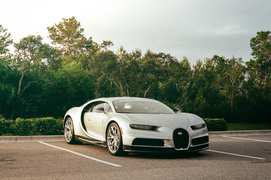
The successor to the Chiron, the Tourbillon, introduces a V16 hybrid powertrain, generating an staggering 1,800 hp. Priced at a premium exceeding $3.5 million, the Tourbillon bridges the gap between classic internal combustion charm and the instant-torque requirements of the modern era. It represents the pinnacle of luxury car market investment for those looking to secure an asset that blends heritage with cutting-edge hybrid performance.
Rising Stars and Specialized Speed Demons
Beyond the headline-grabbers, several manufacturers are pushing the boundaries of what is possible, often focusing on niche performance metrics like downforce-to-drag ratios and extreme battery discharge rates.
Hennessey Venom F5: A 1,817 hp masterpiece of Texan engineering. With a verified 272 mph top speed, John Hennessey’s team is actively refining the F5 to pierce the 300 mph barrier on public-legal tires.
Bugatti Mistral: The ultimate open-air experience. With a 270 mph top speed, it is the world’s fastest convertible, serving as a swan song for the legendary W16 quad-turbo engine.
Rimac Nevera R: An iteration of pure electric efficiency. It hits 0-60 mph in a blistering 1.7 seconds and delivers 2,107 hp, making it the most capable track-day weapon in the current fastest cars in the world 2025 lineup.
Aspark Owl: A Japanese enigma that utilizes extreme lightweight carbon construction to achieve a 256 mph top speed, proving that hypercar innovation is a global pursuit.
Practicality Meets Performance: Rapid Road Cars
Not every buyer requires a 300 mph machine. The modern enthusiast often seeks vehicles that provide race-grade performance with daily-driver ergonomics. These fastest cars in the world 2025 (in their respective categories) offer a compelling balance:
Mercedes-AMG GT: Refined, aggressive, and highly capable at 196 mph.
Alfa Romeo Giulia Quadrifoglio: The thinking person’s sedan, offering 191 mph of thrills in a practical four-door configuration.
BMW M8 Competition: A Grand Tourer that excels at high-speed stability and long-distance comfort, utilizing the M Driver’s Pack to unlock speeds north of 190 mph.
Audi RS7 Performance: The master of all-weather grip, blending a twin-turbo V8 with a sophisticated Quattro AWD system.
Lexus LC500: A masterclass in reliability and design, providing a high-revving V8 experience for those who value longevity and style over raw paper stats.
The Future of Hypercar Investment
The fastest cars in the world 2025 are more than just transit; they are high-stakes assets within the luxury car market. As we move further into the decade, we expect to see an even greater convergence of synthetic fuels and battery efficiency. If you are considering purchasing a high-performance vehicle, the key is to look beyond the marketing collateral and focus on the provenance, maintenance infrastructure, and the specific performance car insurance coverage required to operate these machines safely.
Whether you are looking to acquire a limited-edition electric hypercar or a track-focused V8, the market currently offers an unprecedented level of variety. The barrier to entry for extreme performance has lowered in terms of usability, even as the cost of these vehicles reaches stratospheric heights.
If you are ready to move from admirer to owner, the first step is a consultation with a specialist who understands the unique intersection of high-speed automotive engineering and asset management. Reach out to our expert team today to schedule an evaluation of current market inventory and take the first step toward securing your own place at the pinnacle of automotive history.