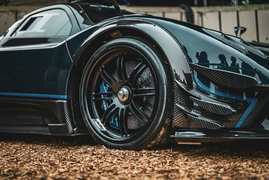
The Apex Predators: Navigating the Stratosphere of Automotive Velocity in 2025
The relentless human obsession with speed—a primal drive as foundational as the discovery of the wheel—continues to reshape the automotive landscape in 2025. From the modest 10 mph benchmarks of the 1885 Benz Patent-Motorwagen to the reality-bending velocities attainable by today’s hypercars, the history of the automobile is a chronicle of audacity. While specialized jet-powered dragsters may dominate closed-course speed records, the true fascination for the elite enthusiast lies in the world’s fastest cars 2025: machines that harmonize stratospheric performance with road legality.
Having spent a decade embedded in the automotive industry, observing the transition from mechanical purity to hybrid-electric complexity, I have witnessed an unprecedented acceleration in performance engineering. The current era serves as a definitive inflection point where high-voltage battery architecture no longer merely competes with internal combustion; it often eclipses it. For those tracking the evolution of the fastest cars in the world 2025, the narrative is no longer just about horsepower figures. It is an intricate, data-driven symphony of fluid dynamics, carbon-fiber structural integrity, and thermal management. Navigating this sector requires a deep understanding of automotive performance engineering, where the pursuit of extreme velocity is synonymous with high-value investment and luxury car market dominance.
The New Monarchs: Engineering the Limits of Physics
To understand the elite echelon of top speed hypercars available for purchase, one must appreciate the diversity of technical philosophies currently defining the industry.
Koenigsegg Jesko Absolut: The Theoretical Sovereign
Christian von Koenigsegg remains the gold standard for automotive ambition. The Jesko Absolut represents an obsessive refinement of drag reduction. Utilizing a 5.0-liter twin-turbocharged V8, this machine yields 1,600 horsepower on E85 fuel. With a dry weight of just 1,390 kg, the power-to-weight ratio is virtually unparalleled. While its claim of exceeding 310 mph remains a theoretical apex, its verified 0-400-0 km/h record of 27.83 seconds proves that the vehicle possesses the chassis dynamics and braking efficiency necessary to manage such kinetic energy. For collectors seeking to buy a used hypercar or secure a new Koenigsegg, the Absolut stands as the pinnacle of internal combustion ambition.
Yangwang U9 Xtreme: The Electric Paradigm Shift
In 2025, the Yangwang U9 Xtreme fundamentally altered the industry’s perception of battery-electric potential. Achieving a validated 308 mph (496 km/h) on a German runway, this vehicle is not just a car; it is a declaration of dominance for electric hypercars. Driven by four independent motors producing an aggregate 3,000 hp and utilizing a 1,200-volt electrical architecture, it minimizes the energy loss typical of lower-voltage systems. With a production run limited to just 30 units and a price point exceeding £200,000, it marks the high-water mark for premium performance EVs.
SSC Tuatara: The Resilient American
The SSC Tuatara, an American-made marvel, has successfully navigated its share of industry scrutiny to emerge as a genuine speed titan. Capable of producing 1,750 hp on E85, the Tuatara is a testament to the longevity of the twin-turbocharged V8 configuration. With a validated top speed of 295 mph (475 km/h), it remains a cornerstone of the fastest road legal cars segment, proving that American automotive performance engineering remains a force to be reckoned with.
Bugatti Tourbillon: The Hybrid Evolution
The Bugatti Tourbillon is the quintessential example of how heritage brands adapt to the modern era. By integrating a 1,800 hp V16 hybrid powertrain, Bugatti has effectively bridged the gap between the mechanical nostalgia of the Chiron and the electrification requirements of the future. With a 0-60 mph sprint of under 2.0 seconds and a price tag of £3.2 million, it serves as the ultimate asset in the luxury car market, blending unrivaled craftsmanship with world-class velocity.
Specialized Performance: The Elite Contenders
Beyond the top-tier kings, the market is crowded with machines that emphasize different aspects of extreme speed. The Hennessey Venom F5, with its 1,817 hp “Fury” V8, continues its assault on the 300 mph barrier, representing the peak of American muscle. Simultaneously, the Bugatti Mistral provides the singular experience of open-top motoring at 270 mph, proving that extreme engineering can be combined with bespoke luxury.
In the realm of electric precision, the Rimac Nevera R has pushed its output to 2,107 hp, achieving a 0-60 mph time of 1.7 seconds and a top speed of 267 mph. This is complemented by the Aspark Owl, a Japanese engineering marvel that, in its track-homologated form, continues to challenge the established European and American giants. Furthermore, the McLaren Speedtail and Koenigsegg Regera serve as reminders that aerodynamic efficiency and transmission innovation—such as the Regera’s direct-drive system—can be just as effective as raw, brute force.
Accessible Velocity: Beyond the Hypercar
Not every enthusiast requires 300 mph, but the demand for rapid road cars remains consistent. Vehicles like the Mercedes-AMG GT and the BMW M8 Competition offer high-performance grand touring capabilities that bridge the gap between daily usability and track-day aggression. For the executive, the Alfa Romeo Giulia Quadrifoglio offers a unique proposition: a nimble, 191 mph sedan that defies the typical trade-offs between performance and comfort. Similarly, the Lexus LC500 serves as a masterclass in stylish, aspirated V8 power, appealing to those who value the sensory experience of a car as much as the speedometer reading.
Strategic Acquisition and Ownership
Entering the market for these elite vehicles is as much about financial planning as it is about automotive passion. Whether you are analyzing the investment potential of limited-run models or seeking new car financing for high-performance exotics, the process demands expert guidance. Understanding the intricacies of performance car insurance and long-term maintenance cycles for these complex engineering marvels is critical.
As we move deeper into 2025, the gap between the hypercar and the daily driver continues to shrink, with manufacturers integrating more sophisticated tech into even their entry-level sport models. The landscape is moving fast, literally and figuratively.
Are you prepared to secure your place in this era of automotive history? Whether you are researching the specific mechanical nuances of the next generation of supercars or exploring financing options for your next dream purchase, the path to ownership starts with a deep dive into the latest market data. Contact our team today to discuss your next acquisition or to receive a comprehensive consultation on the current state of the global hypercar market.