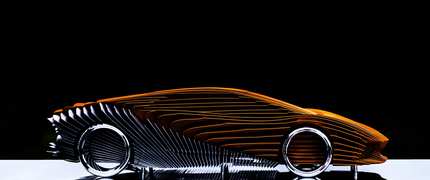
Engineering Excellence: 10 Legendary Production Cars with True Motorsport DNA
There is an electrifying, visceral quality to driving a vehicle born from the crucible of professional racing. We aren’t talking about superficial aesthetic packages or dealer-installed “sport” trim levels; we are referring to genuine motorsport DNA—the engineering lineage where high-output power plants, originally forged for the podium, find their way into a road-legal chassis. These machines offer a direct, unfiltered connection to the track, translating the mechanical brilliance of endurance racing and Formula 1 into an experience you can enjoy on public roads.
As an automotive engineer with over a decade of experience in performance vehicle development, I have observed that the most coveted cars aren’t just fast; they are the result of “trickle-down” innovation. When manufacturers invest millions into racing, they aren’t just chasing trophies—they are conducting the world’s most extreme R&D. Here are 10 production vehicles that blur the lines between race car and daily driver, representing the pinnacle of high-performance engineering.
Why Motorsport DNA Drives Innovation
The mantra “Win on Sunday, Sell on Monday” is more than a marketing slogan; it is a fundamental pillar of automotive advancement. Pushing an engine to 10,000 RPM for 24 hours straight reveals structural weaknesses that a standard road-testing cycle never would. From ceramic composite brakes and carbon-fiber monocoques to advanced forced induction and hybrid energy recovery, the technology in our daily drivers is often a byproduct of the checkered flag. By integrating race-proven components, automakers enhance the ROI (Return on Investment) of their racing programs while building unparalleled brand equity that commands premium pricing.
Alfa Romeo Montreal: The Tipo 33 Legacy
The Montreal remains a masterclass in elegant, track-inspired design. Its 2.6-liter V8 engine is a direct descendant of the Tipo 33, a dominant force in endurance racing. Despite being refined for street manners, this high-revving masterpiece retains the sharp throttle response and distinct exhaust note that defined Alfa Romeo’s golden era. It is a car that demands driver engagement, rewarding those who understand its pedigree.
BMW M1, M5 (E28), and M6 (E24): The Inline-Six Pantheon
BMW’s M division is the gold standard for blending motorsport competence with daily usability. The M88 inline-six engine, which powered the iconic M1 ProCar, is arguably one of the greatest engines ever produced. Its lineage continued into the E28 M5 and E24 M6, proving that a high-revving racing heart could be domesticated for luxury-sedan duty without losing its aggressive edge.
Chevrolet Camaro ZL1: The Can-Am Titan
In 1969, Chevrolet achieved something legendary with the ZL1. By placing a 427 cubic-inch, all-aluminum V8 engine—originally designed for the high-speed demands of Can-Am racing—into a production car, they created a street-legal drag strip king. With only 69 units ever produced, the ZL1 represents the ultimate marriage of raw, naturally aspirated power and road-legal hardware.
Ferrari Dino 206 GT: The Formula 2 Pioneer
The Dino 206 GT changed the trajectory of Ferrari forever. Its 2.0-liter V6 was developed within the context of Ferrari’s Formula 2 program, emphasizing a lightweight architecture and exceptional power-to-weight ratios. This mid-engine layout paved the way for the mid-engine Ferraris we know today, proving that high performance doesn’t always require twelve cylinders.
Ferrari F50: The Closest Thing to F1
If you want to experience the sensation of a 1990s-era Formula 1 car, the Ferrari F50 is the closest you will ever get. Its 4.7-liter V12 was derived directly from the Type 641 F1 car. With an 8,500 RPM redline and a rigid, carbon-fiber tub, this is a track weapon that just happens to be plated for the street. It is the definition of automotive performance excellence.
Ford GT: The Le Mans Homage
Whether you look at the 2005 Ford GT or the 2017 iteration, the DNA is unmistakable. The 2005 model utilized a modular supercharged V8 rooted in Daytona Prototype racing, while the 2017 Ford GT utilized a twin-turbo EcoBoost V6 designed specifically for the rigors of endurance racing. These cars are not merely tributes; they are living testaments to Ford’s dominance at the 24 Hours of Le Mans.
Jaguar XJ220: Group C Speed
The XJ220 holds a special place in history as a record-breaker. By utilizing a 3.5-liter twin-turbo V6 engine pulled from the Jaguar XJR-11 Group C race car, Jaguar crafted one of the fastest production cars of the 1990s. This is the ultimate example of taking a competition-derived motor and housing it in an aerodynamically advanced chassis to shatter velocity benchmarks.
Plymouth Belvedere: The NASCAR Hemi
The 1964 Plymouth Belvedere brought the “Race Hemi” to the masses. Developed specifically to conquer NASCAR ovals, the 426 Hemi V8 provided the necessary torque and reliability to dominate the track. Its inclusion in a standard Belvedere production model brought genuine motorsport-grade horsepower to suburban driveways, changing the muscle car landscape forever.
Porsche 918 Spyder: The Hybrid Revolution
The 918 Spyder showcased the future of performance by blending a 4.6-liter V8, derived from the RS Spyder LMP2 race car, with cutting-edge electric motors. This hybrid synergy results in mind-bending acceleration and world-class handling, proving that hybridization is not just for efficiency—it is for blistering, track-ready speed.
Porsche Carrera GT: The Analog Apex
The Carrera GT is frequently cited as the greatest supercar of the early 2000s, largely due to its 5.7-liter V10 engine. Originally intended for a Formula 1 program and later refined for a Le Mans prototype, this engine offers a spine-tingling sound and a level of mechanical purity that modern, turbocharged engines often lack. It remains the gold standard for analog driving experiences.
Investing in Automotive History
For collectors and enthusiasts, these vehicles represent the intersection of historical significance and mechanical mastery. The value of high-performance supercars and track-ready production vehicles has continued to rise, as modern regulations make it nearly impossible to replicate the raw, unadulterated nature of these engines. Whether you are looking for a weekend thrill or a long-term investment in luxury vehicle appreciation, these models stand as the high-water marks of engineering.
If you are ready to explore the market for high-performance exotics or need expert guidance on maintaining a vehicle with a race-derived engine, contact our concierge desk today to discuss your next acquisition or service appointment. Experience the difference that true motorsport DNA makes.