Ferrari 296 GTB Review: The Benchmark the Lamborghini Temerario Must Surpass
In the high-stakes theater of modern supercars, the Ferrari 296 GTB stands as a testament to Maranello’s ability to pivot without losing its soul. Since its debut, the automotive landscape has shifted aggressively toward electrification. Yet, even as we look toward a future dominated by the upcoming Lamborghini Temerario—with its promise of a 10,000rpm, 903bhp V8 hybrid powertrain—the Ferrari 296 GTB remains the gold standard for performance engineering. After a decade of tracking the evolution of mid-engined exotics, it is clear that Ferrari hasn’t just built a hybrid; they have redefined the Ferrari 296 GTB as an immersive, driver-focused instrument.
The Hybrid Paradigm Shift
The arrival of the Ferrari 296 GTB signaled the end of an era for the pure, naturally aspirated V8. By introducing a 120-degree, twin-turbocharged V6 paired with an electric motor, Ferrari faced the skepticism of purists head-on. However, once you experience the 819bhp output on a winding mountain road, the transition to hybrid power feels not like a compromise, but a technological masterstroke.
Unlike the four-wheel-drive complexity of the SF90, the Ferrari 296 GTB sends its massive power exclusively to the rear wheels. This layout preserves the classic “Prancing Horse” handling dynamics that enthusiasts crave. The electric motor, delivering 165bhp, acts as a torque-filling surge that eliminates the traditional “turbo lag” associated with high-output forced induction. The result is a drivetrain that feels instantaneous—a seamless blend of electrical efficiency and visceral internal combustion.
Technical Prowess and Aerodynamic Mastery
To understand why the Ferrari 296 GTB is so effective, one must look at its underlying tech stack. The car employs a bespoke six-axis sensor system, the 6w-CDS, which tracks vehicle attitude with pinpoint accuracy. When pushed, this system talks to the active E-Diff and Side Slip Control to maximize cornering exit speeds.
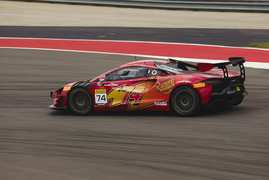
Furthermore, the Ferrari 296 GTB utilizes advanced active aerodynamics to achieve 360kg of downforce at 155mph. Unlike past iterations that focused purely on drag reduction, this platform uses a deployable rear wing and clever underbody sculpting to create a “virtual” long-tail effect. For those seeking the ultimate track experience, the Assetto Fiorano package adds Multimatic dampers and carbon-fiber aero appendages, shaving weight and sharpening the turn-in response to levels typically reserved for GT3 racing machines.
Behind the Wheel: Performance Meets Playfulness
Driving the Ferrari 296 GTB is a study in controlled aggression. In town, the whisper-quiet electric-only mode allows for discreet movement, a surreal experience for a vehicle capable of 0-62mph in 2.9 seconds. But transition the Manettino dial to “Qualifying” mode, and the V6 unleashes a sharp, mechanical soundtrack that evokes the golden age of Ferrari racing.
The steering is light, lightning-fast, and provides the kind of granular feedback that is increasingly rare in the era of electronic power steering. The car doesn’t just grip; it communicates. Even at the limit, the Ferrari 296 GTB invites the driver to play, allowing for manageable slides that feel intuitive rather than terrifying. It is this balance—the ability to be a civilized tourer one moment and a track-slaying weapon the next—that creates the Ferrari 296 GTB competitive edge.
The Rivalry: Challenging the Status Quo
The industry is currently holding its breath for the Lamborghini Temerario. While the Temerario looks to dominate the power-to-weight metrics with its high-revving V8, it faces a steep climb. The Ferrari 296 GTB has already successfully translated the complexity of high-voltage hybrid systems into a chassis that feels entirely organic.
While the McLaren 750S remains a formidable rival, offering a lightweight, raw driving experience, the Ferrari 296 GTB occupies a unique space: it is the most technologically sophisticated car in its segment without feeling clinical. Many owners also consider the Ferrari 296 GTB as a sound investment in the luxury vehicle market, where depreciation curves for limited-run or highly specified Maranello models remain favorable compared to broader supercar segments.
Interior Ergonomics and The “Tech” Hurdle
If there is one area where the Ferrari 296 GTB meets resistance, it is the cabin interface. The reliance on haptic buttons on the steering wheel can be hit-or-miss, particularly when navigating high-speed cornering sequences. However, the cockpit remains a beautiful, cockpit-centric environment. The build quality, materials, and overall ambiance are undeniably premium, cementing its status as a top-tier Ferrari 296 GTB interior design achievement.
Final Verdict: Is It Still the One to Beat?
The automotive world is obsessed with “the next big thing,” but the Ferrari 296 GTB serves as a stark reminder that true engineering excellence is about the synthesis of parts, not just the raw performance figures. Whether you are tracking the car on a weekend or enjoying a spirited drive along the coast, the Ferrari 296 GTB provides a level of engagement that is truly rare.
As we look toward the future, the Ferrari 296 GTB stands as the benchmark. It is a car that has mastered the hybrid transition while staying true to the emotional core of the Italian supercar. Whether Lamborghini’s new entrant can match the refined agility and daily usability of the 296 remains to be seen, but the bar has been set extraordinarily high.
If you are ready to experience the pinnacle of mid-engined engineering, there is no substitute for getting behind the wheel. Contact your local Ferrari dealer today to schedule a private demonstration and discover why the Ferrari 296 GTB continues to reign supreme.