Ferrari 296 GTB Review: The Benchmark for the Modern Hybrid Supercar
In the shifting landscape of high-performance automotive engineering, few models have triggered as much industry debate as the Ferrari 296 GTB. Having spent over a decade putting the world’s most potent machines through their paces, I have seen brands struggle to balance tightening emissions regulations with the visceral “soul” that defines a supercar. Ferrari, however, did something remarkable with the 296 GTB. By pivoting from their celebrated V8 architecture to a high-revving, electrified V6, they haven’t just kept up with the times—they’ve set a new standard that rivals like the Lamborghini Temerario are now scrambling to match.
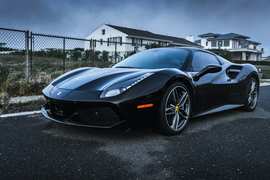
The Ferrari 296 GTB is, quite simply, the car the Lamborghini Temerario has to beat. It is a masterclass in packaging, delivering 819bhp through a combination of a 120-degree twin-turbocharged V6 and a sophisticated electric motor. While enthusiasts initially mourned the loss of the naturally aspirated V8, the reality on the asphalt is undeniable: the 296 GTB is more potent, more agile, and arguably more engaging than any of its predecessors.
Engineering the Hybrid Revolution
At the heart of the Ferrari 296 GTB lies a 2,992cc V6 engine that defies conventional expectations. By adopting a “hot-vee” configuration, Ferrari has placed the turbochargers within the V-angle, significantly reducing lag and centralizing mass. On its own, this combustion engine produces a staggering 654bhp. When you factor in the 165bhp electric motor mounted between the engine and the eight-speed dual-clutch transmission, you reach a combined 819bhp.
Unlike the four-wheel-drive SF90, the 296 GTB keeps things pure by channeling that power exclusively to the rear wheels. This layout is a testament to Ferrari’s confidence in their electronic chassis systems. The 6w-CDS (six-way Chassis Dynamic Sensor) acts as the brain of the operation, measuring acceleration and rotation across three planes. This data is fed into the active E-Diff and Side Slip Control (SSC) systems, ensuring that even with such astronomical power, the car remains approachable—or terrifyingly quick, depending on your setting.
The Dynamics of Precision
Driving the Ferrari 296 GTB on a technical circuit reveals why this vehicle currently commands so much respect in the market. The steering is remarkably sharp, a characteristic trait of Maranello’s latest engineering era. The short wheelbase—50mm shorter than the F8 Tributo—improves turn-in response significantly.
If you opt for the Assetto Fiorano package, the experience intensifies. With Multimatic spool-valve dampers and carbon-fiber aerodynamic appendages that add 20kg of front downforce, the car transforms into a track-focused weapon. On the limit, the weight of the hybrid battery pack, located low and central behind the seats, is largely forgotten. The vehicle feels light on its feet, encouraging you to trail-brake deep into corners while the ABS-evo system manages brake-by-wire pressure to keep the chassis stable.
Performance vs. Usability
For those considering this vehicle as a daily driver or a weekend companion, the Ferrari 296 GTB offers a surprising level of refinement. In its default “Hybrid” mode, the car can move in near-silence on electric power alone for around 15 miles—a feature that is oddly satisfying when leaving your neighborhood early in the morning.
However, move the manettino dial to “Qualifying,” and the character shifts. The V6 produces a unique, high-frequency rasp that sounds markedly different from the traditional V8 rumble. It is a mechanical symphony that feels modern yet distinctly Ferrari. Acceleration is brutal, with 0-62mph arriving in just 2.9 seconds. The surge of torque from the electric motor fills in any gaps in the turbocharger’s spool, creating a sensation of endless, linear acceleration that makes the Ferrari 296 GTB one of the fastest point-to-point cars on the road today.
The Competition and the “Temerario” Factor
The arrival of the Lamborghini Temerario, with its 10,000rpm V8 hybrid powertrain, marks the next chapter in this supercar rivalry. While Lamborghini targets high-revving, high-drama engagement, the Ferrari 296 GTB holds the high ground on integration. Ferrari’s hybrid system feels organic; it doesn’t just add power, it enhances the driving dynamics.
When comparing the Ferrari 296 GTB price and performance against the McLaren 750S, it becomes clear that Ferrari has focused on the “total package.” Where the McLaren is raw and focused on power-to-weight, the Ferrari is a technological marvel that somehow feels more human. It is a challenging car to master, yet it provides the driver with the tools to do so effectively.
Interior and Technology Challenges
If there is a flaw in the Ferrari 296 GTB, it lies within the cabin interface. Borrowing the button-heavy, haptic-touch steering wheel from the SF90, the cabin can feel overly complicated. Simple tasks, like adjusting the mirrors or toggling driving modes, occasionally require multiple presses. It is a reminder that in the transition to a fully digital cockpit, Ferrari has sacrificed some of the tactile charm that defined older models.
Is the Ferrari 296 GTB the Right Choice for You?
With a starting price well north of $300,000 depending on options, the Ferrari 296 GTB is a significant investment. However, for those seeking a car that bridges the gap between classic Italian passion and modern electrification, there is currently no superior alternative. It manages the difficult feat of being a technological tour-de-force without feeling like a computer simulation.
The industry is watching closely to see if the upcoming hybrid Lamborghini can replicate this level of chassis balance. Until then, the Ferrari 296 GTB remains the gold standard—a car that proves hybridization is not the end of the supercar era, but rather its most exciting evolution.
Are you ready to experience the pinnacle of hybrid performance? Contact your local authorized Ferrari dealer today to schedule a private consultation and discover how the 296 GTB can redefine your driving expectations.