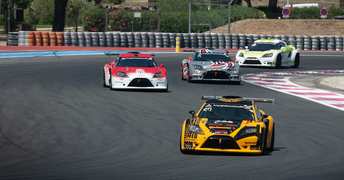
Engineering Excellence: 10 Iconic Production Cars with True Motorsport DNA
There is an undeniable, visceral thrill that comes from piloting a vehicle born on the racetrack. We aren’t simply talking about aesthetic “track-inspired” body kits or aggressive aero packages; we are talking about elite engineering—power plants forged in the heat of high-stakes competition. These motors bring high-revving, adrenaline-inducing performance to public asphalt, offering drivers a tangible connection to the legendary machines that inspired them.
In my decade of experience working with automotive performance benchmarks, I have learned that the gap between a Sunday circuit hero and a daily driver is often thinner than marketing departments would have you believe. Below, we explore 10 production vehicles that successfully bridged this divide, embedding genuine motorsport DNA into the cars you can park in your garage.
Why Manufacturers Invest in High-Performance Engineering
The intersection of motorsport and road-car production is not merely a marketing ploy; it is a laboratory for automotive evolution. Racing demands extreme reliability under relentless stress, forcing engineers to solve thermal management, material fatigue, and power delivery issues in real-time. What is learned at Le Mans or Daytona today dictates the performance metrics of the vehicles we drive tomorrow.
Innovations like carbon-ceramic brakes, dual-clutch transmissions, and advanced forced-induction systems all trace their roots to the paddock. Furthermore, success in premier racing series creates a “halo effect.” When an OEM dominates the leaderboard, their production models gain an immediate, quantifiable increase in market desirability. For the enthusiast, however, the real value lies in the sensory experience: the specific harmonic resonance of a race-bred engine and the raw agility of chassis tuned by championship-winning teams.
Alfa Romeo Montreal: The Endurance Prototype
The Alfa Romeo Montreal houses a 2.6-liter naturally aspirated V8 derived from the Tipo 33 sports prototype. This engine, which earned its stripes in grueling endurance tests like the Targa Florio, remains a masterclass in Italian design. Though detuned for the street, it retains its sharp, high-revving personality, capable of screaming to 7,000 RPM. It serves as a reminder of an era when road cars weren’t just fast; they were artistic expressions of mechanical velocity.
BMW M1, M5 (E28), and M6 (E24): The Inline-Six Legacy
BMW’s M division is synonymous with track precision. The M88 inline-six, which debuted in the legendary M1, was a direct descendant of BMW’s specialized ProCar racing programs. The engineering team cleverly ported this high-output, 3.5-liter masterpiece into the E28 M5 and E24 M6, effectively creating the archetype for the modern sports sedan. The precision of these engines, combined with their DTM-winning heritage, solidified BMW’s reputation for building “drivers’ cars” that feel right at home on a closed course.
Chevrolet Camaro ZL1: The Can-Am Terror
In 1969, Chevrolet introduced the 427 cubic-inch (7.0-liter) V8 ZL1, a rare beast with deep roots in Can-Am racing. By utilizing an all-aluminum block, engineers achieved a power-to-weight ratio that was revolutionary for its time. While the production version was slightly detuned to ensure longevity, the ZL1 remained a street-legal drag strip monster. Today, it remains a high-value collector’s item, representing the pinnacle of American muscle car performance derived from professional racing.
Ferrari Dino 206 GT: Formula Roots
Often overlooked by those who only look for the Ferrari badge, the Dino 206 GT was a pivotal mid-engine achievement. Its 2.0-liter V6 was developed directly from Ferrari’s 1960s Formula 2 program. With a lightweight construction and a high-pitched, race-tuned exhaust note, the Dino delivered a pure, unadulterated experience that felt like a race car reduced to its most essential, exhilarating form.
Ferrari F50: F1 on the Freeway
To celebrate their 50th anniversary, Ferrari essentially took their 1990 Formula 1 machine—the Tipo 641—and made it street-legal. The F50’s 4.7-liter V12 is a structural member of the chassis, directly mounted to a carbon-fiber tub. When you drive an F50, you aren’t just driving a supercar; you are experiencing the raw, mechanical vibration of a 1990s-era Grand Prix car. It remains one of the most authentic motorsport experiences ever offered to the public.
Ford GT: The Modern Le Mans Homage
The Ford GT stands as a testament to the company’s endurance racing dominance. The 2005 iteration utilized a supercharged 5.4-liter V8 born from the lessons learned in the Daytona Prototype series, while the 2017 model pushed the boundaries of efficiency and output with its 3.5-liter twin-turbo EcoBoost V6. Both versions prove that whether it is displacement or forced induction, the objective remains the same: sustained high-speed performance that survives 24-hour races.
Jaguar XJ220: Group C Dominance
The Jaguar XJ220’s history is famously complicated, but its engine is pure performance history. Utilizing a 3.5-liter twin-turbocharged V6 derived from the XJR-11 Group C racer, the XJ220 briefly held the title of the fastest production car on Earth. It is a rare example of a manufacturer taking a top-tier endurance racing heart and transplanting it directly into a road-going chassis, resulting in a machine that feels terrifyingly fast even by 2025 standards.
Plymouth Belvedere: The NASCAR Legend
The 1964 Belvedere serves as a potent reminder that motorsport DNA isn’t restricted to European sports cars. Its 426 Hemi V8 was the king of NASCAR, a “Race Hemi” designed to dominate the oval track. Bringing that level of high-compression, high-displacement power to a production vehicle was an act of pure defiance. It set the stage for the muscle car wars and cemented the Hemi engine as a permanent fixture in American automotive folklore.
Porsche 918 Spyder: Hybrid Hypercar Tech
The 918 Spyder is a masterclass in how to integrate modern hybrid technology with classic racing architecture. Its 4.6-liter V8 is an evolution of the unit used in the RS Spyder, which conquered the LMP2 class at Le Mans. By pairing this high-revving racing engine with a sophisticated electric drive system, Porsche created a vehicle that handles like a dedicated track car but offers the refinement of a grand tourer.
Porsche Carrera GT: The Analog Apex
The Carrera GT remains, in my professional opinion, one of the most significant cars of the 21st century. Its 5.7-liter V10 was originally slated for an F1 project that never saw the light of day. Porsche, refusing to waste such engineering brilliance, repurposed the engine for a Le Mans prototype, and eventually for the Carrera GT. It lacks modern driver assists, making it an unforgiving, raw, and pure machine that requires genuine skill to operate—much like the racing cars that birthed its engine.
Conclusion: Driving the Legacy
These vehicles are more than just impressive specs on a spreadsheet; they are the result of thousands of hours of R&D, failures, and triumphs on the world’s most demanding circuits. Owning one is an investment in automotive history, offering a driving experience that modern, sterile vehicles struggle to replicate.
If you are looking to elevate your garage with a vehicle that possesses true pedigree, now is the time to audit your options. Whether you are interested in the analog engagement of a V10 Porsche or the forced-induction mastery of a modern Ford GT, these cars offer a connection to the track that cannot be simulated. Reach out to our performance consultants today to discuss finding your own piece of motorsport history.